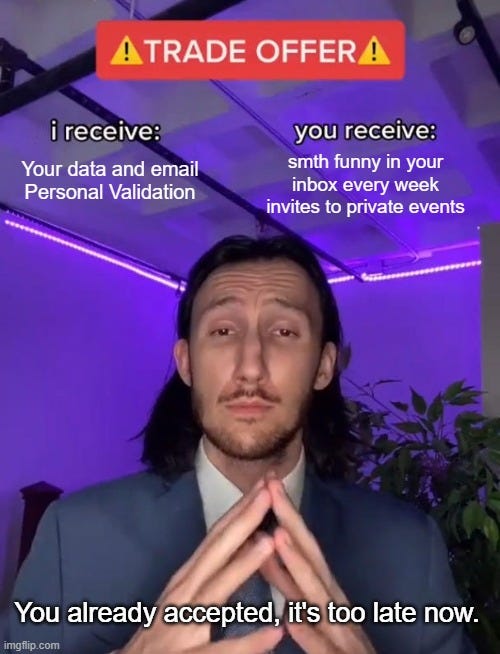
How to stay ahead in the AI world.

A quick word from the author:

Hallo Schmetterlinge,

Let’s dive right into today’s topic: slavery. The digital kind.

For the past 2 years, the vision of UiPath has become real:

AI has taken over most of the repetitive, boring tasks we used to do: filling reports, generating presentations etc. Those of us who were responsible for those tasks got fired. We are no longer digital slaves to our work, we’ve made AI our digital slave.

But we all know how AI works now, it’s only able to replicate what we’re giving it.

I truly believe that we will not be replaced by AI. We will be replaced by other people using AI to ship better and faster.

Now, AI clearly has the “faster” part down, but the actual problem shows up when we’re talking about better. Better is subjective, each individual sees the world through a different lens.

A book written by a human is 10x more enjoyable than one written by AI. Why? Thanks to all the subtleties, the errors, the expressiveness, the life-experiences that brought the author to writing the book.

What can we actually do to stay ahead in this AI world? The real answer is: experience more. You’ve been freed now. Tasks that used to take days now take minutes. Use the freedom to experience new worlds, new perspectives, new styles, new music, new movies, new art. Then create it.

The context around you and your interpretation, your creative filter, will make you stand out now. The taste you will develop in the coming years will be the reason why people choose to work with you.

Develop a taste. Bring your creative filter into this world. And be fucking awesome at it.

Some sh*t I found in my inbox and on the web:

  • Emails for humans: the most critical skills you can learn is writing a good email in your own tone of voice.

“Just imagine if you went back to some of the most ambitious people in, say, the 1200s and told them about email: this magical invention that allows you to write a message to anyone, anywhere, in an instant. Their faces would light up. They’d start thinking of all the possibilities. It would feel like real sorcery.

Now imagine the look on their faces when you tell them about the main ways people use email today.

  • Boring work messages

  • Promotion and ads

  • Verification for other software (“here’s your code!”)

  • “Cold outbound” – spammy sales email en masse

  • Links to other places (“Jenny liked your post on Facebook!”)”

“These private equity firms need liquidity. They need the capital to raise new funds.

The inability to return capital has forced firms to launch “Continuation funds” and “NAV Squeeze” — both major red flags for the industry.

Another creative way to get liquidity is through “dequity.” Here’s Bloomberg with the context (emphasis added):

“As private equity firms struggle to sell the companies they own and return cash to investors, their counterparts in the world of private credit are offering special loans to tide them over.”

“The larger the company, the more likely it is that devs use GitHub Copilot. With the exception of “huge” (10,000+ people) places, the larger the company, the more that GitHub Copilot adoption is reported. If you want to use GitHub Copilot day-to-day, your best bet might be to join a large company!

The smaller the company, it’s more likely that people use Cursor, Zed, or another AI IDE.”

“Shapley sees this new breed of foundry as shifting away from traditional type foundries, precisely because of this focus on brand. The feeling is that agencies that are embedded in branding are better positioned to design type for branding projects.

That’s how Shapley sees it – and why he thinks we’re seeing more studios create their own foundries.”

  • We have AI thanks to this Russian Nerd Fight. Understanding Markov Chains.

Tool of the Week: Wayde

Now here’s something hard to admit from my side: we almost got Wayde into ReaktorX. Ultimately, stars didn’t align, but now they went on to build something extremely simple and useful: an influencer discovery tool.

Your brand can now just input their brief and some preferences, and Wayde searches multiple platforms and extracts the right influencers you should work with to reach your target.
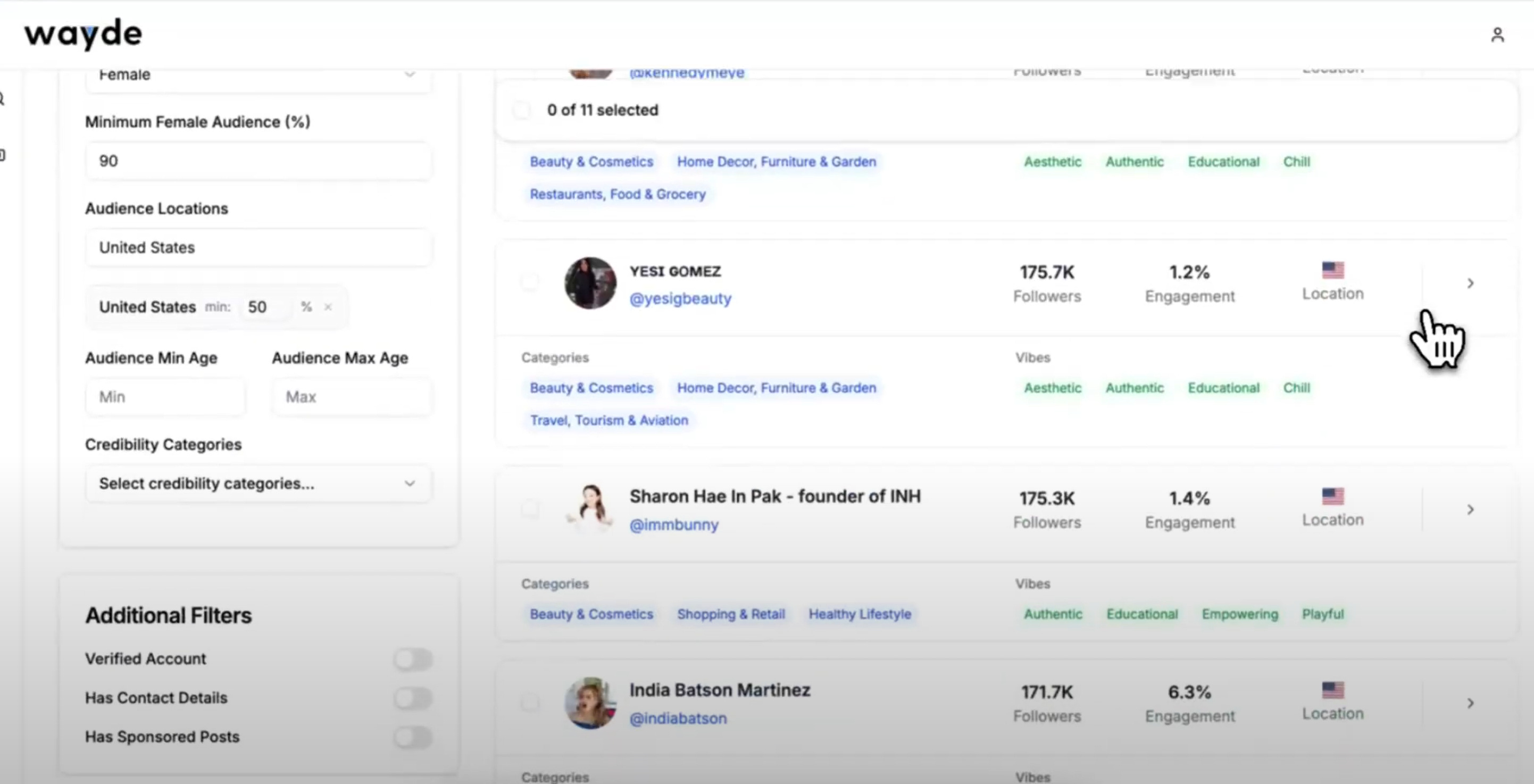
If you’re a branding/advertising agency, it’s just a no-brainer to give it a try. You could find just the right people to help you promote your brand in a matter of minutes.

Startup Idea of the Week: Recipe Central

You know what’s really annoying for home cooks?

Scrolling through a novel-length food blog just to find out how many eggs go in banana bread.

So here’s the idea: a GitHub-style platform… but for recipes. A collaborative recipe platform for people who actually cook.


How It Works:

You sign up and get your own personal recipe repo. It’s clean, structured, and actually readable. Recipes follow a standardized format: ingredients, steps, tags, and notes. No fluff, just food.

Found a community recipe you love? Fork it. Swap ingredients, tweak portions, or adapt it for your gluten-free keto vegan cousin.

Cooking with a friend? Collaborate on a shared recipe, propose changes.

Want inspiration? Browse a searchable, filterable recipe library with version history, comments, and community tips. Basically Stack Overflow, but for dinner.


Why This Works:

🧠 Developers love structured data. Cooks love clear instructions. This gives you both.
🍽 Forking makes recipes remixable—cooking becomes more playful and personalized.
👩‍🍳 Social features turn solo cooking into a shared experience.

Business Model:

Freemium for hobbyists.
Pro accounts for food creators with analytics, monetization tools, and branded collab features.
Bonus: let influencers and chefs drop limited-edition “recipe releases.” Think GitHub meets Substack meets Bon Appétit.


Go-To-Market Plan:

Target home chefs, food TikTokers, and recipe nerds tired of janky Pinterest boards.
Get early adopters from culinary schools, Reddit cooking subs, and indie food bloggers.
Drop viral features: “Today’s most forked recipe,” “Your cooking streak,” “Top 10 trending tweaks.”
Partner with cookware brands, meal kits, or even smart kitchen startups.


What Could Go Wrong?

  • Someone forks a recipe 8 times and ends up with BBQ ice cream.

  • Recipe wars over “the real carbonara.”

  • Grandma finds out you rewrote her dumpling method and stops texting back.

But hey—food is meant to evolve.

Ok, hear me out, you should try: Building anticipation.

You’re gearing up to launch a new product you know your customers will love. But with everyone’s packed schedules these days, you wonder:

Is it really worth the extra effort to build anticipation? Or should you just send an email on release day?

Research from Cornell and USC confirms that anticipation isn’t just hype – it boosts customer enjoyment and satisfaction much more than we thought.

Create a feeling of anticipation and excitement to an experience (e.g. videos of a holiday destination), a service (e.g. how relaxed they will feel after the massage) or a new product (e.g. teaser, feature descriptions, reviews from early users). Encourage people to imagine what they’ll like about the actual experience (e.g. happy, relaxed, excited).

  • People enjoy the experience of a service or product more if they anticipate the feeling of using it in advance (e.g. watch previews and imagine how they’d feel using the product).

Across 6 experiments and a survey with 71,929 people hotel customers, researchers found that:

  • People remembered an experience (e.g. spring break travel) as 9.6% more enjoyable when they were asked to savor the upcoming experience (e.g. think about how they’d feel about it beforehand) vs simply asked to imagine it (e.g. thinking about the activities they’d do)

  • People who watched a movie trailer related to the feature film they were about to view (e.g. a Toy Story trailer before a Toy Story short film) enjoyed the movie 8.6% more than those who saw a trailer unrelated to the feature film (e.g. a Minions trailer before a Toy Story short film)

  • After being given information about a video game and asked how much they thought they would enjoy it, people were 21% more likely to enjoy it (vs those who were just asked to wait)

  • The effect is weaker if the product or service is low quality (e.g. lower enjoyment if the game is buggy vs not), and especially if expectations are low.

IT MIGHT ALSO BACKFIRE:

  • The research focused on pleasurable experiences like travelling and video games. It’s unlikely that the effect is the same for experiences that lead to neutral feelings like mundane experiences (e.g. a shipment of new office supplies) or functional products (e.g. buying a vacuum cleaner).

  • The experiments did not look at how the timing between anticipation and the actual experience affects people’s views. Savoring it too early is likely to backfire, especially if the experience gets delayed (e.g. waiting longer than expected in line for an appointment).

  • The effect might be the opposite (e.g. anticipating leads to lower enjoyment) if waiting for consumption creates impatience or negative feelings (e.g. not enough items available when launching a new product) or if the actual experience doesn’t live up to the anticipation.

What’s going on for us: (thanks for asking!)

  • You’ve played Mario before, but have you ever tried Nario17? It’s the same,b tu worse. This was a one-shot prompt after feeding our AI a Game-Design Document. We’ll have even better results in the coming weeks 😉

I’ll go back to my digital void now. See you next week,

Thanks for reading Founder’s Compass! Subscribe for free to receive new posts.

Kill the meetings person.

A quick word from the author:

Bonjour mon petit croissants, time for hating.

As tempting as it is, don’t do it. Don’t plan weekly stand-ups and check-ins. That will lead to just less performance from everyone involved. You probably already have a colleague on your team that ACTIVELY wants meetings to happen.

Let them go. It’s just not worth it…

The real performance happens with small, efficient communication bytes. If you need a 30-min meeting just to set priorities and tasks, I’m sorry, to tell you this, but you just might be an idiot.

And that’s alright, being an idiot is temporary. We’re all idiots sometimes (some of us on the regular), but that doesn’t give you an excuse to be an idiot about THE SAME THINGS EVERY TIME.

Rant over, back to logic land.

So, on your next weekly meeting, suggest this: everyone takes responsibility for their tasks and then kill the weekly meeting. The next meeting happens when the last person finishes their task.

Is this peer-pressure? Of course.

Is this completely unhealthy? Definitely.

Will this burn out people in your team? 1000%.

Will this also get stuff done really fast and reveal who’s underperforming or not executing tasks properly? YES.

GOOD execution requires clarity. Clarity requires vision. Vision requires some actual critical thinking and planning, not just ChatGPT output. Kill the meetings, bring deliverables, show your work. Overcommunication is way too real in today’s work culture.

Aren’t you the happiest when you give ChatGPT/any other slop-generator a very generic prompt, with barely any context, and somehow it returns exactly what you asked for?

That’s how your team should output work ALL THE TIME. We’re humans, we’ve still got brains (for now), let’s properly use them.

This week’s inspiration:

“It sounds almost like science fiction but for half a century we all stared down the barrel of an electron gun for hours at a time.

Around the neck of the vacuum tube is a set of magnetic coils used to deflect the beam to different areas of the front screen. Changing the direction and magnitude of the current flowing through the coils manipulates the magnetic field, allowing precise control over the path of the electron beam.”

“Real-world designers like Interior Designers and Architects aren’t here for fantasy.

These are professionals who balance value, time, and quality like second nature. They’re crafters, not artists. They build things you touch and feel. They make hundreds of tiny decisions every week. And they have a sharp nose for sniffing out what’s real — and what’s fluff.”

“The Bay Area has the highest concentration of SaaS founders, executives, and veterans who’ve scaled companies to $100M+ ARR, IPOs, and beyond. This density creates a network effect—you’re surrounded by people who’ve done it before and can help you shortcut mistakes. Whether it’s hiring a VP of Sales who’s scaled a team to $50M ARR or finding a product leader who’s built enterprise-grade solutions, the talent pool here is unparalleled.”

“But I learned a lesson that now seems obvious in hindsight: there isn’t one “right way” to build software.

For example, if you’re making a game for a 24-hour game jam, you probably don’t want to prioritize clean code. That would be a waste of time! Who really cares if your code is elegant and bug-free?”

“Here’s what they did:

→ Hired five contemporary writers
→ Told real stories from Hinge couples in a hardcover book
→ Released a Substack series (one story per week)
→ Ran book clubs in New York and London
→ Partnered with Substack creators and hashtag#BookTok influencers
→ Took it OOH across both cities

Why it worked:

→ Substack is where Gen Z goes for stories that feel real
→ Print books are still a thing (big time)
→ TikTok fuels the find
→ Book clubs build the bond”

Tool of the Week: Langgraph

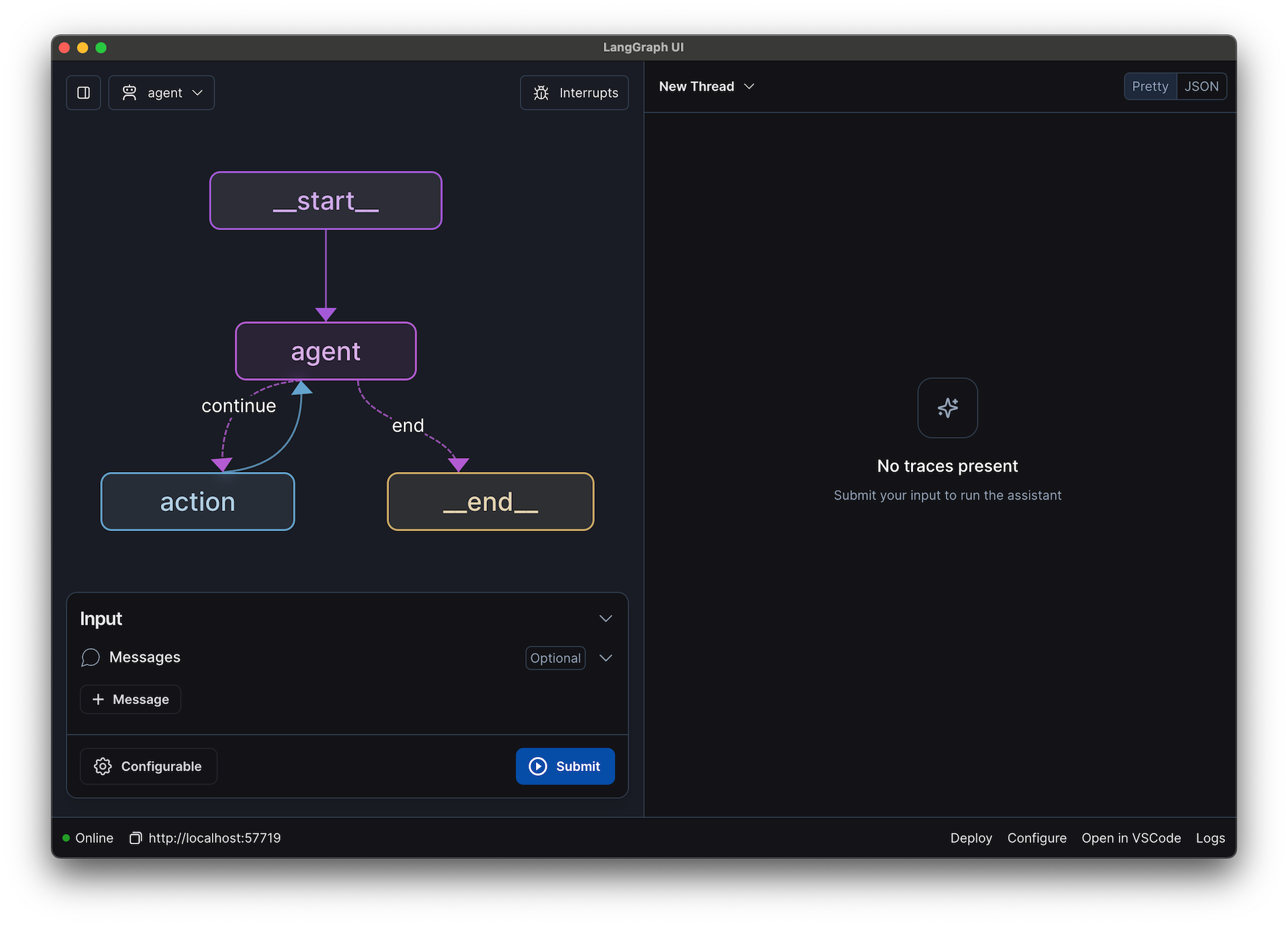
The secret behind some of the newest unicorns minted just this year (ahem, Lovable, ahem), Langgraph enables you to build very advanced AI flows, with self-healing capabilities and just generally good results.

It’s one of the toughest tool to learn at the moment (at least from my perspective, but I’m also being an idiot about it, I went straight for implementation instead of reading the docs).

Now take this and go build your AI agent that analyzes Hinge profiles and writes the perfect message. For sure you’ll land a good one… (the hating hasn’t stopped, you probably noticed).

Startup Idea of the Week: Die better.

You know what’s worse than death?

Dying without a will. Actually, living without a will might be worse—because you’ll spend every adult milestone (getting married, having kids, adopting a cat, buying a second-hand jet ski) quietly ignoring that voice in your head whispering “hey… maybe you should write that down somewhere.”

Here’s the idea:
An AI-powered will maker that helps you die organized—without lawyers, stress, or napkin scribbles.


How It Works:

Type answers to a few natural-language questions (no legalese), and the AI does its thing.

📝 It figures out your state’s legal requirements and picks the right will template.
👶 You name guardians, assign assets, plan for pets, even add healthcare directives.
🔒 The final doc is neatly generated, stored securely, and shareable with trusted people.
📅 You get automatic reminders to update it when life happens. (New kid? New dog? New crypto wallet? Covered.)
👩‍⚖️ Want a lawyer to give it a once-over? That’s a premium add-on. Human eyes. Peace of mind.


Why This Works:

  • Most people want a will, they just don’t want to talk to a lawyer or fill out a 47-page PDF.

  • Millennials and Gen Z are entering their “please take care of my plants if I die” era.

  • AI makes it fast. Clean. Painless. Almost fun?


Go-to-Market Plan:

Target new parents, pet owners, and anyone over 30 having a mild existential crisis.

Partner with life insurance companies, financial apps, or funeral planning services (yes, those exist).

Also:

  • Bundle it with tools like Notion, Dropbox, or Google Drive.

  • Turn your “Last Will” into a shareable badge.

  • Add subtle dark humor. People love that.


What Could Go Wrong?

  • Someone forgets to update their will for 10 years and accidentally leaves everything to their ex.

  • The AI spells your kid’s name wrong and you don’t notice.

  • A will generated in Florida gets used in Oregon and suddenly it’s not legally binding. Yikes.

That’s why optional human review exists. Humans are good at legal stuff. Mostly.


Business Model:

Freemium. Free basic wills. Paid upgrades for:

  • Lawyer review

  • Secure long-term storage

  • Bundled estate planning docs (power of attorney, medical directives, etc.)

  • Notifications when state laws change (because they will)

What’s going on for us: (thanks for asking!)

  • Here’s a rough view of what our prototype do (I wanted it to rhyme, ok?)

    Basically, with a single prompt, we get a simple game built in the Godot Game Engine. Why is that important? Most of the other code-gen tools build games in typescript or javascript or smth similar. Godot is an actual game-engine, so an artist could actually build their vision, make it real. Now that it’s working on the backend, we’ll make it real and release a working front-end next week. Wanna be the first to test it and give us feedback? DM me.

  • Also, our HaHaHackathon is well under way: https://lu.ma/ji6hhy6t. 26 people already decided to join us next week in building cool, random, funny-type sh*t. We’ve got room for 30. Register now or be forever forgotten 🙂

  • House in SF = LOADING

May you have a blessed week ahead, keep it tight.

Thanks for reading Founder’s Compass! Subscribe for free to receive new posts.

Marry a Designer pls.

A quick word from the author:

Hello my favorite royal, loyal subjects,

I recently read something on someone’s instagram story: To build a vision, one must consume information, filter it and transform it.

That’s what I’m doing every week when I’m writing this newsletter and I like to think that I’m helping you build your vision as well.

Here’s the thought of the week from my side:

design > engineering.

With the recent advancements, good design will be the real differentiator for the next 5 years. So if you know a good designer, start taking them out for drinks or strategically marry them. And if you don’t, become a designer yourself.

Learning Materials:

“Streamed and unstreamed responses describe how an AI agent sends its answer to the user. With a streamed response, the agent starts sending words as soon as it generates them. The user sees the text grow on the screen in real time. This feels fast and lets the user stop or change the request early. It is useful for long answers and chat-like apps.”

“The way to finding my own voice in design and developing a taste that feels authentic to me was simple. I stopped looking for inspiration online.

Growing your taste is an act that requires effort and intention, not mindless media consumption. Analog media has become my main source of inspiration, because it isn’t dictated by algorithms. It has no built-in popularity filter. It doesn’t tell me what’s “good” but leaves the decision to me.”

“As designers, we often need to share our work and seek feedback from stakeholders. But sometimes, things don’t go as planned — people might zoom in on tiny details, or shift the conversation to another topic that’s outside of the scope.”

“While brands have long used aspiration in their marketing, today’s strategies feel noticeably different. The focus has shifted from luxury and exclusivity to escapism itself, and it’s becoming increasingly visible across industries. Consider Coca-Cola’s “Real Magic” campaign, for instance, which uses AI-generated imagery to create whimsical dreamscapes. Or Apple’s recent “Mother Nature” ad, which reframes a corporate report about the brand’s support of environmental and social issues as a high-concept film starring Octavia Spencer. In London, Gucci’s “Gucci Cosmos” series invites visitors into a surreal world of time travel and design history.”

“What is system design? In my view, if software design is how you assemble lines of code, system design is how you assemble services. The primitives of software design are variables, functions, classes, and so on. The primitives of system design are app servers, databases, caches, queues, event buses, proxies, and so on.”

Tool of the Week: LLM SEO Trend Analyzer

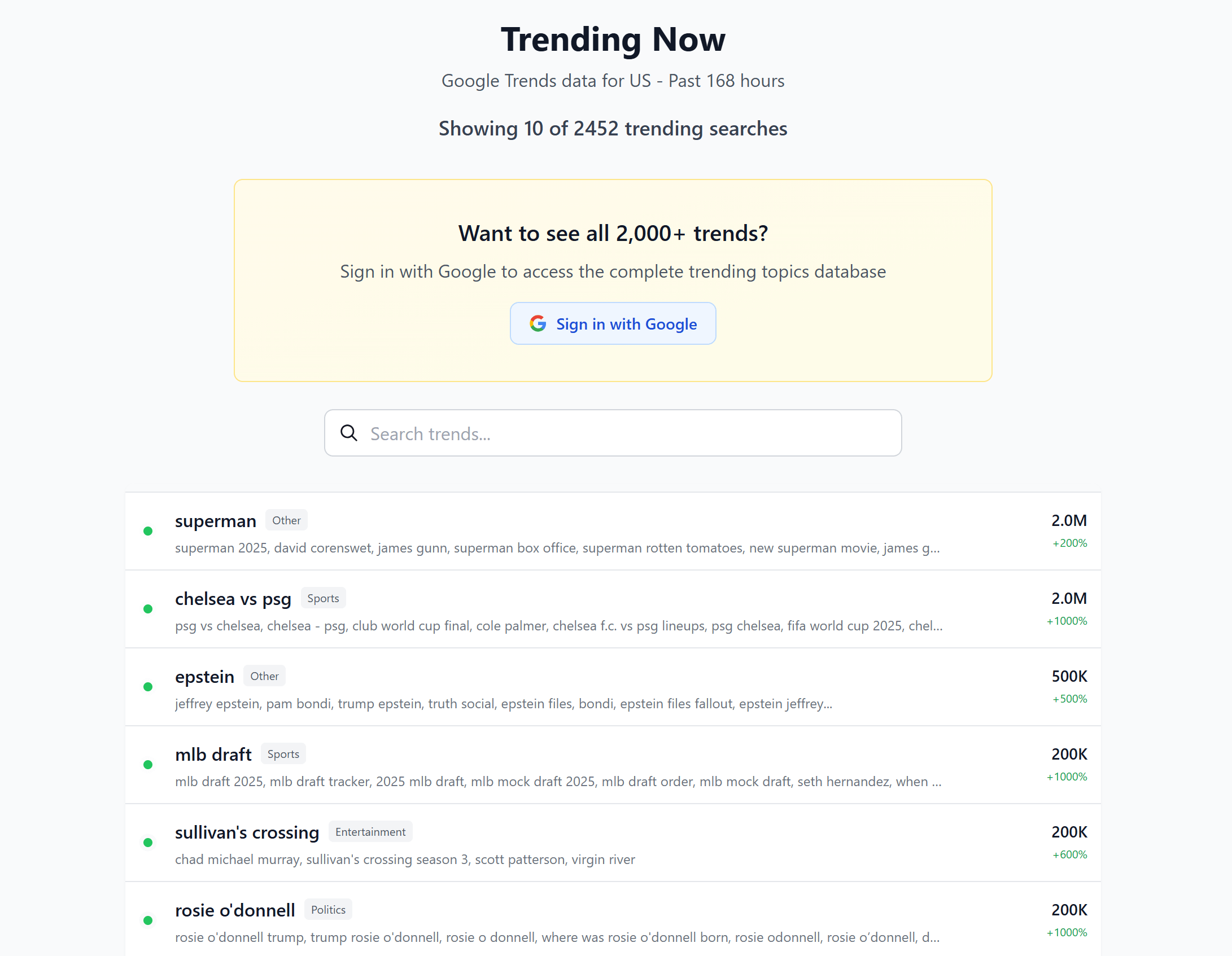
What are people asking chatGPT and other AI’s nowadays?

Just like we have all sorts of SEO analyzer tools for Google, now we have an analyzer of AI search.

What can you do with this? Idk, maybe optimize your content, maybe follow the trends for your social media content, or maybe just understand where humanity is at this point in time.

Startup Idea of the Week: Git for Money

You know what’s really sexy for developers?

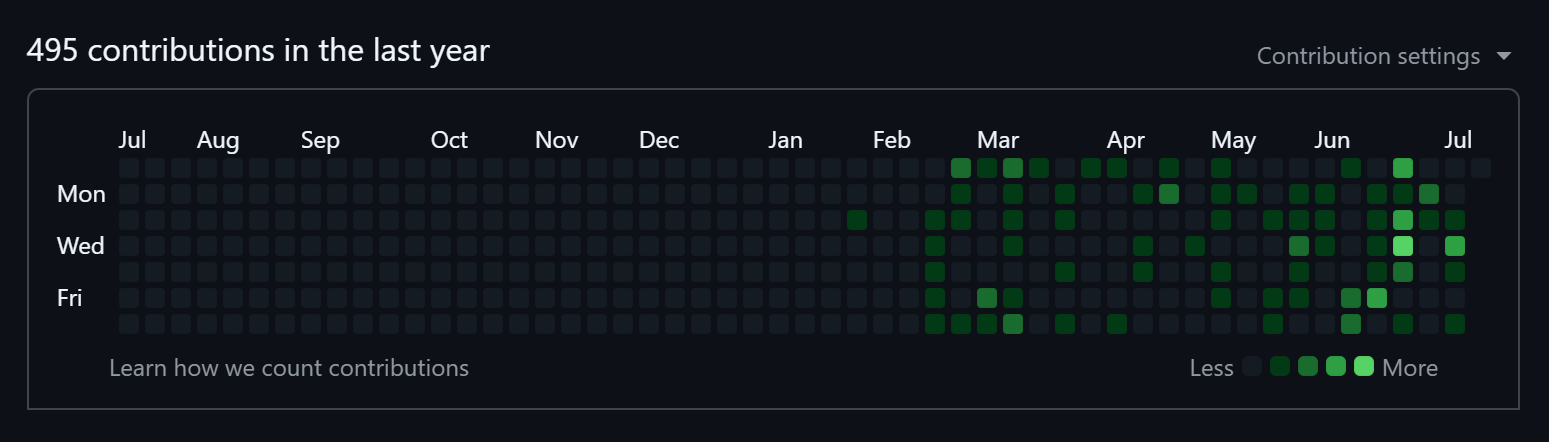
Those sweet, sweet green boxes on Github. They show just how commited you are…

So here’s the idea: a GitHub-style dashboard… but for your income. Think of it as a contribution graph, except instead of commits, it’s cash. Daily income plotted out like green squares of financial pride. Whether you’re a solo indie hacker, a freelancer, or running a baby startup, this is your new favorite tool.


How It Works:

  • You securely link Stripe, PayPal, or your bank.

  • Each day, your income (or your startup’s revenue) gets plotted on a grid that looks suspiciously like your GitHub contributions chart.

  • Green means money came in. Dark green? You’re on fire.

  • You can keep it private or share it publicly to flex (or cry) with your peers.


Why This Works:

  • Founders love streaks. It’s the same psychology as Duolingo, GitHub, or gym check-ins—except this one is directly tied to money.

  • Creates a habit of financial awareness without the stress of spreadsheets.

  • And for businesses? This becomes the gateway to more advanced features: revenue forecasting, dashboards, lightweight financial statements—whatever you’d normally pay a boring accountant for.


Go-to-Market Plan:

  • Target indie founders, solopreneurs, and “build in public” types on Twitter and LinkedIn.

  • Partner with no-code platforms, Stripe Atlas communities, or startup accelerators.

  • Make it fun to share: turn your income grid into a social badge, just like GitHub.


What Could Go Wrong?

  • Someone connects a dead bank account and sees nothing but white squares. Panic ensues.

  • “Public revenue” gets mistaken for success and fuels unhealthy comparison culture.

  • Your income chart looks like a heartbeat monitor. And not in a good way.

But hey—money is emotional. And we already track everything else. Time to make financial streaks a thing.

Ok, hear me out, you should try: Design Lightning

This one comes straight from Randy Hunt, Head of Design at Notion.

“I’ll describe a specific ritual that we do. Because a lot of this is about rituals – simple, powerful ideas that you commit to and repeat.

One of them is something we call Design Lightning, which we do every two weeks.

Every single person on the team shares what they’re working on. It’s a broadcast thing, one to many, so there’s no dialogue and it’s not critique.

We just blast through it – about 20 people in 30 minutes. There is one slide deck, and we have the names of Slack channels at the bottom where people can learn more.

You get this cadence of everyone sharing at a similar fidelity, at a similar time. The speed of it is actually part of the fun, and part of the challenge.”

It really gives us the highlights of what you’re doing – “Here’s where I’m at with this thing.” It might be a load of screenshots of variations, or it might be a click-through prototype.

And we record those, and we share them with the whole company. People can download the deck and flip through it at their own speed.

We end up getting all this feedback, from engineers, product managers and all these other people. They understand what we’re working on, and that’s a really powerful thing.

What’s going on for us: (thanks for asking!)

  • We’ve managed to get a working prototype of our new startup:

No, we’re not reinventing TicTacToe. This is actually the result of a single prompt we issued our agentic workflow. A fully working game of TicTacToe, built inside the Godot Game Engine. We’re working hard next week to make it build more complex games like roguelites and top-down survival games.

  • In 2 weeks time, we’re organizing our first SF hackathon: HaHaHackathon. More details soon.

  • This weekend, we were lucky enough to attend the AI Summit at Viva Frontier Tower. The news about who presented what, why and how the world will end will be posted next week on Noi Venim Din Viitor.

  • Also, one of our ReaktorX companies needs help: If you’re a builder that wants to play around with AI and help HAIP automate a part of their process, here’s the tech requirments: https://haip-space.notion.site/brief. DM me if you want to jump in and help them build.

Ok, we’re done here, now get lost. Go make something amazing.

Thanks for reading Founder’s Compass! Subscribe for free to receive new posts.

Insert creative title here.

A quick word from the author:

Thank you to all people who’ve joined this effort to follow Founder’s Compass (there’s already 200 of us!). Jotting down my hot takes and off-the-wall comments on what’s going on in the startup world right now is refreshing and keeps me grounded and I hope it has at least 10% of that effect on you too when you’re reading this.

Sparking Creativity:

“Software has been eating the world for a while now. There’s been a shift. not dramatic, but gradual. slow. quiet. like how one day you realize everyone around you stopped using chrome. somewhere along the way, software stopped being invisible. it started meaning things. your browser, your calendar, your to-do list, these aren’t just tools anymore. they are taste. alignment. self-expression.”

Thanks for reading Founder’s Compass! Subscribe for free to receive new posts and support my work.

“For any kind of notification, there are 4 stages.

1️⃣ Trigger

What causes the notification? Ideally should be based on an action the user’s previously taken, like setting a reminder.

2️⃣ Hook

What compels the user to read the notification? And then open it?…..”

“Pointing allows a model to refer to entities or parts of entities precisely, and locate them in space. Gemini 2.5 Pro is able to reason about the entities it is pointing to, opening new opportunities for interacting with images. For example, Gemini 2.5 Pro is able to reason about empty space in the context of a supermarket display, knowing that this indicates restocking may be needed. In the example below, Gemini identifies the baby eggplant needs restocking.”

“The conflict is the story.

One of my Pixar bosses explained conflict to me in a way that I still think about today, which is in terms of WANTS vs. NEEDS. So the thing a character WANTS is almost always something external/physical.”

“Over the course of several months, researchers at MIT asked 54 students to write a series of essays. Participants were divided into three groups:

  • LLM group: using ChatGPT for assistance

  • Search Engine group: using Google without any AI help

  • Brain-only group: writing without any tools

Each participant completed three essays in their assigned condition. In a fourth session, some people switched methods (for example, ChatGPT users then wrote without AI, and vice versa).”

Tool of the Week: Pointer

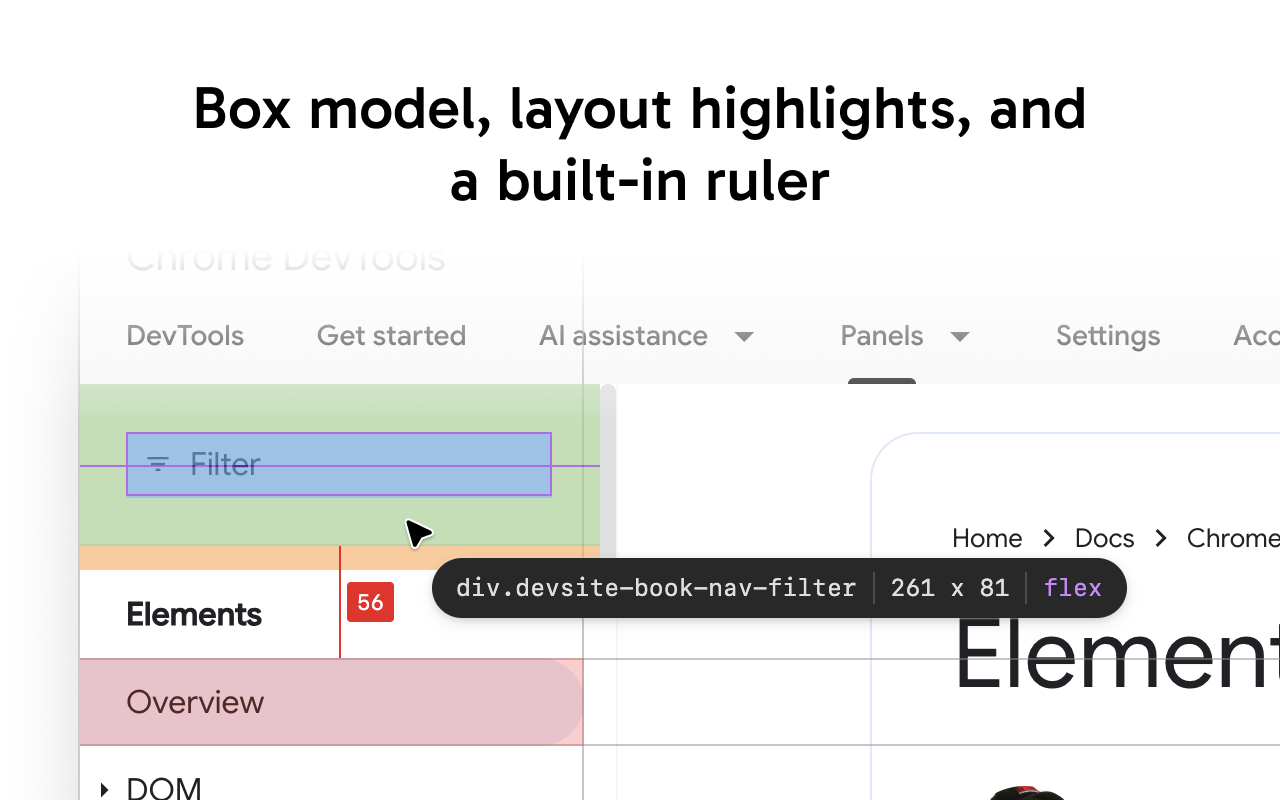
Pointer enhances Chrome’s built-in element inspector with a persistent, intuitive DOM navigation tool that stays active while you work. Unlike the default DevTools inspector that turns off after selecting an element, Pointer keeps running so you can quickly inspect multiple elements without constantly reactivating the tool.

Startup Idea of the Week: F&B Kickstarter

According to a recent study I conducted while staring at a croissant for too long, 8 out of 10 food startup founders say their biggest challenge is getting funding before they have a product people can taste.

So here’s the idea: A Kickstarter-style platform made specifically for food and beverage brands. Think small-batch kombucha brewers, mushroom jerky makers, or those mad scientists working on zero-alcohol whiskey that actually tastes good. These founders could launch limited-run product drops, test new flavors, and raise capital without begging grocery store buyers or mortgaging their sourdough starter.

How It Works:

  • Creators post a product concept (ex: “hibiscus habanero soda—trust me”)

  • Customers pre-order (and optionally subscribe)

  • The campaign hits its goal → the food gets made → early-adopters provide feedback.

  • Feedback rolls in, and the creator either pivots, scales, or vanishes.

  • Customers feel like early insiders.

  • It creates viral momentum (niche foodie communities love being first)

Go-to-Market Plan:

  • Target indie food incubators, food TikTokers, and popup chefs

  • Partner with shared kitchens & DTC logistics companies

  • Launch a few headline-grabbing products (e.g., “AI-designed energy bar” or “beer made with bread waste”)

What Could Go Wrong?

  • Someone inevitably underestimates how hard it is to ship 5,000 bottles of spicy mango hot sauce.

  • A batch goes viral… for the wrong reasons (see: “mayo-flavored soda”)

But hey—food is culture. And people love putting their money where their mouths are. Literally.

Ok, hear me out, you should try: pitch decks for your customers.

Imagine this: You’re a broke college student. You want a MacBook. It’s $2,000. Your parents are… skeptical.
Apple’s response?

“Don’t worry, kid. We got slides.”

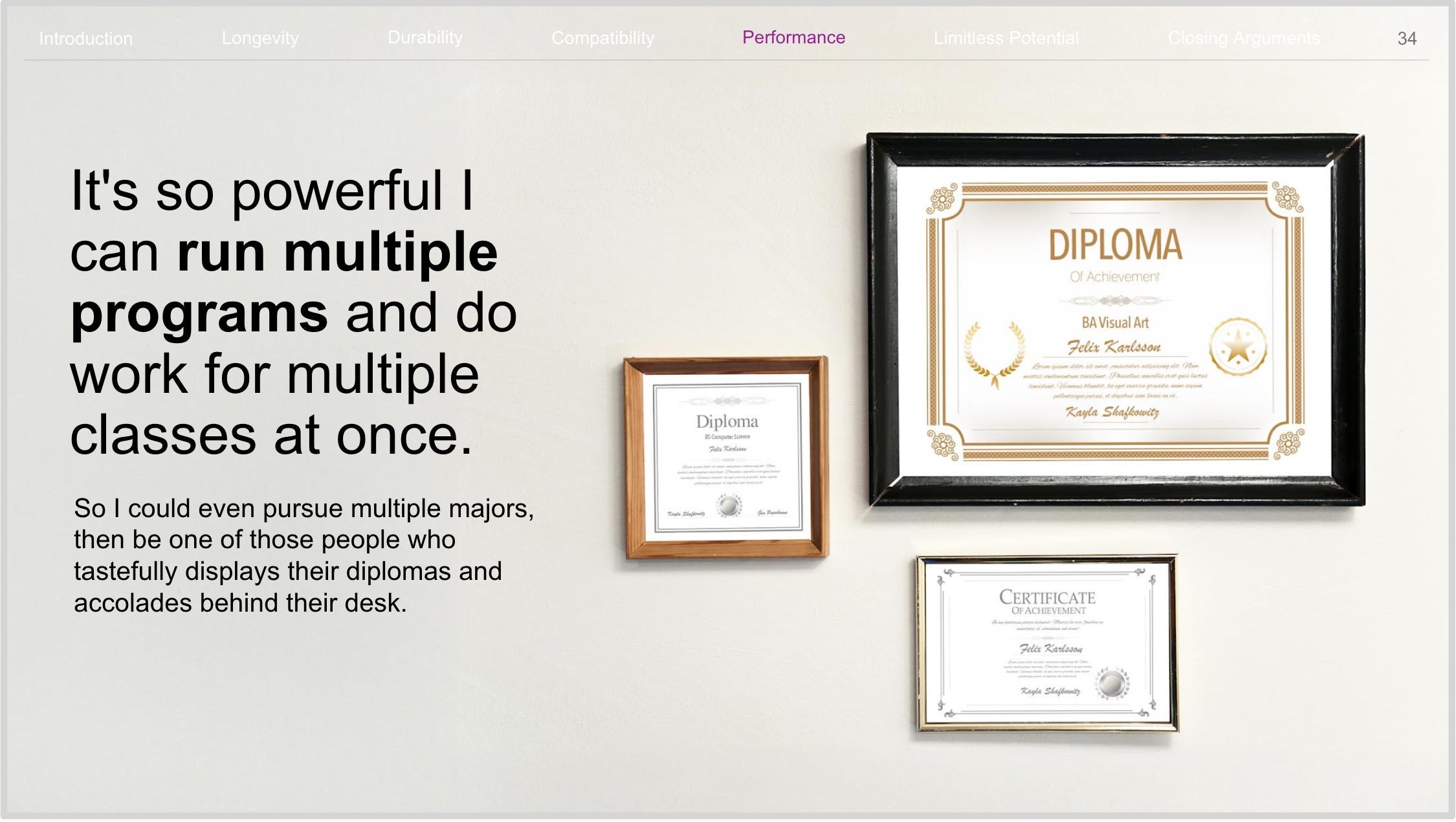
No joke—Apple released a full 81-slide presentation template called “Why I Need a Mac for College” to help students convince their parents to cough up the cash.

Your biggest fans suck at selling you.

They love your product. They just don’t know how to pitch it to the person holding the wallet (parents, bosses, procurement demons, etc).

Enter: Certificate Marketing.
Also known as: “Give them the script.”

Enterprise SaaS companies have been doing this for years—building “value realization” decks so their champions can go convince the CFO.
Apple just ported that idea to the consumer world.

Every brand where user ≠ buyer should steal this immediately.

What’s going on for us: (thanks for asking!)

  • This week we’re visiting the first couple of houses that would be a fit for “CEE Tech House”, and there’s some promising one’s out there (including a castle!).

  • Our US legal entity just got it’s EIN (it’s unique identification number that allows it to open a bank account) so we’ll start operating on US soil in no-time.

  • Massive updates at “Noi Venim Din Viitor” as we’re currently exploring the video realm to generate personalized news reels. Also, you’ll see a lot more tech-related articles coming out of our pages starting now.

To all the readers that got this far, I wish you a day. Preferably good <3

Thanks for reading Founder’s Compass! Subscribe for free to receive new posts.

We’re back babyyyyyyyyyyyy!

Before that, a quick word from the author:

To all the fresh faces: Hello and welcome to my hi5 page! (if you don’t get that reference, you might be too young to read this, ask for parental consent before proceeding).

This is the place to get weekly, unhinged, sometimes funny (but mostly not) updates from the startup world, peppered with some cool tools, design tips and hot takes to help you reach that sweet-sweet $1M ARR nectar.

I have yet to write enough content to train an AI on my writing style, so for the time being, you get stuff written from what some of my family affectionately call “half-a-brain” of mine.

Basically, to sum it up:

Let’s get it started up-in-here.

The “New” in News:

A study published in Nature in November with a sample of nearly 17,000 people found that we can’t tell apart human-made from AI-generated poems. And, strikingly, we tend to prefer the latter.

The CC signals project instead proposes a different solution: a set of tools that offers a range of legal enforceability and that has an ethical weight to them, similar to the CC licenses that today cover billions of openly licensed creative works online.

Google says the new AI search feature, which appears at the top of the results page, will include multiple videos, along with an AI summary of each. You can tap the video thumbnails to begin playing them right from the carousel. The summary is intended to extract the information most relevant to your search query, so you may not even have to watch the videos.

Peter Thiel’s Founders Fund, which led Polymarket’s $45 million series B funding round last year, is leading the newest fundraising event, and the platform is also planning to come back to the US, the report stated.

“Touch grass? I AM the lawn.”

“Delulu is the solulu.”

“Slayed so hard I need a rest day.”

Our return on ad spend jumped from around 30% to 120%.

Tool of the Week: mysite.ai

I mean, you probably have seen this coming from a mile away. We’ve just recently organized an event with mysite.ai and 4 other startups (if you’ve been there, I hope you’re enjoying the bottles of wine you stole 😉

Back to our victim of the week, mysite.ai is lovable for people who have a hard time using lovable.

what?

Yes, some people don’t even know what to prompt the AI to build. Here’s where mysite.ai comes in. Don’t trust me tho (I’m being paid by them so of course I’m going to say nice things). Give it a try, after their Product Hunt launch, 500 people created websites on their platform, so it must be doing smth right.

Startup Idea of the Week: Ground News Reels

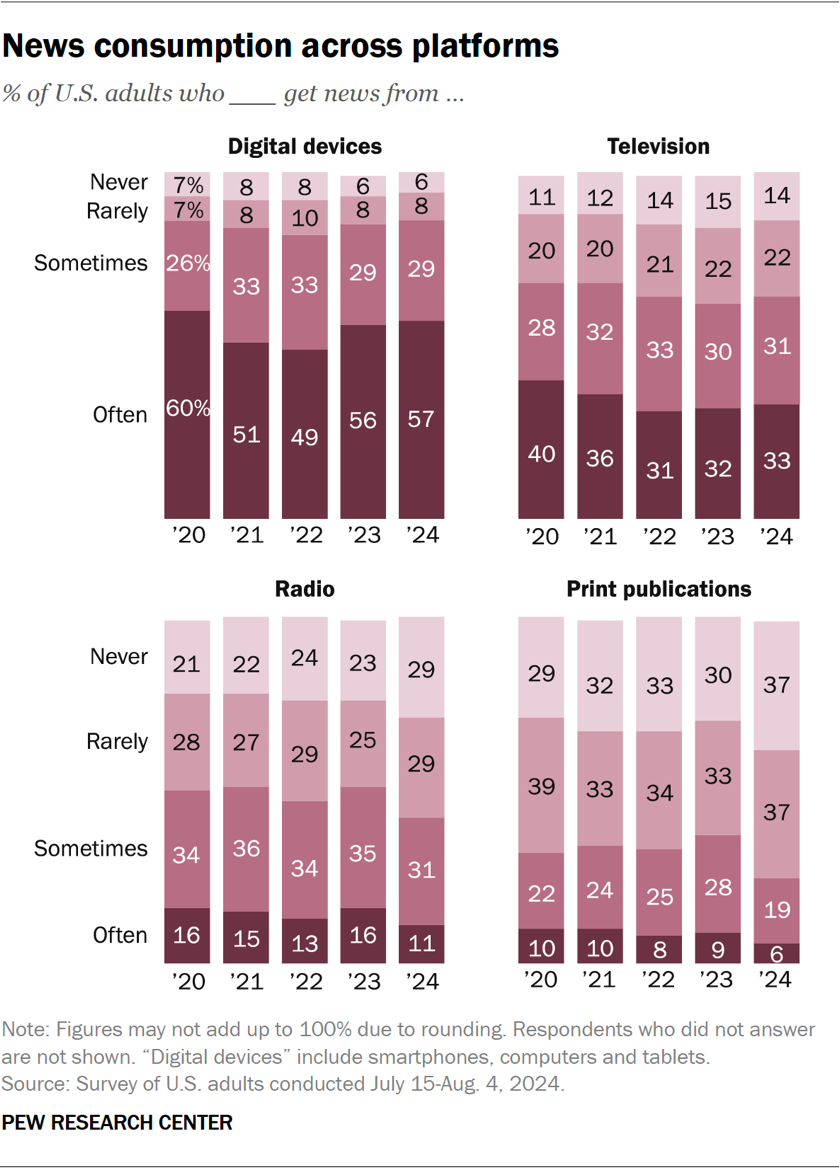
In a recent study I just pulled out of thin air, people said they get their news from TikTok. (it’s actually a Pew Research study, but I’m too tired to go out and find the actual source)

Late edit: Here’s the actual source for the study. I’m lazy, but I’m not a monster, I wouldn’t publish random statistics like this unless I know I wouldn’t get caught.

So, here’s the idea: A short-form news-only platform. Early-adopters: journalists. Make it invite-only in the beginning and have your early adopters actually vote whether a news piece is leaning right or left politically (if we’re talking about political news of course). Then open the floodgates and let news-hungry day-traders overdose on this and nuke the stock market out of existence. What could go wrong?

Ok, hear me out. You should try: Word of Sight

You think you want users to talk about your product? That’s adorable. Talking is for suckers. I want my users to be unwilling, walking, flashing billboards.

Your users become your best advocates simply by letting other people see them using your product. At first glance, Shazam’s recording screen looks empty. Think about the context: People use Shazam in crowded, public places like concerts and cafes. When someone holds up their phone to identify a song, that giant, glowing logo becomes a public display.

Here’s an even smarter one:

To save a tweet with Readwise, you don’t click a private “bookmark” button. Instead, you have to publicly tag @readwise in the comments on X.

This turns every single user action into a miniature, public advertisement. Instead of a silent, personal save, they require a visible endorsement.

Ask yourself: Where will my product be seen?

If it’s used in public spaces:

  • 🎨 Use bold colors. Vibrant colors naturally catch the eye from across a room.

  • 💡 Design bright screens. Give users a reason to have their brightness turned up.

  • 🔘 Make your logo the hero. When possible, make your logo large and central to the main action.

If it’s used privately, think about when it becomes visible:

  • 🧑‍💻 Video calls: Put your logo or brand mark in the top bar where it will appear during a screen share.

  • 🖼️ Screenshots: People love to screenshot dashboards and results. Make sure those areas are clean, well-designed, and clearly branded.

  • 📦 Shared outputs: Encourage sharing that keeps people on your platform. Loom does this perfectly—you share a loom.com link, not just a video file.

But the real secret is to build visibility into your core features:

  • 🏷️ Tie functionality to public actions. Like Readwise, find ways for the core function of your product to be a public act.

  • 🔄 Make sharing the natural workflow. Don’t just add a share button as an afterthought. Design your product so that sharing is the main way to get value from it.

  • 📱 Design for “shoulder surfing.” When someone uses your product, make it distinct and recognizable to someone glancing over their shoulder.

  • 🎯 Add visible feedback to core actions. Grammarly’s green dot is a perfect example. It pops up as you write, making its presence known in screenshots and screen shares.

What’s going on for us: (thanks for asking!)

Products:

We’re live on the play store with our AI Radio App for “Noi Venim Din Viitor”. Download it right here.

We’ve also got a non-working (for now) prototype of a game-making platform similar to what Lovable does. The advantage? It writes (or should write) GDScript for the Godot Game Engine (3rd most popular game engine in the world). Check it out here. Would love to hear your feedback, especially how we can improve the code generation.

Last but not least, we’re actively working on a hacker house for CEE founders here in SF. That’s all I can reveal right now.

Events:

Our “Stealth Reveal Party” just happened, and thanks for coming out. It was a lot of fun (and hope you enjoyed it just as much as we did). What would you like us to organize next?

Kisses and lots of love from your future tech overlord,

5 powerful tools for startups to slay the dragon

Startups have a famously small rate of survival. 80% of them fail. Why? Mira Wilczek talks about the main reason in this TED talk, but to spare you 10 minutes of your life, she says that most startups fail because they pick the wrong problem to focus on.

 Now, ask another 100 founders and entrepreneurs from the ecosystem and you will get 100 different answers. Some blame the team, some the timing and others even the ecosystem itself. 

We call this meeting your dragon. Just like in the hero’s journey, you/your startup will have to face your biggest challenge yet and it will most probably be different than any other dragon other startups encounter. This is also where most meet their demise. 

Meeting our dragon happened at different stages for every startup. We encountered it during validation, tech feasability analysis, product-market fit, betas etc. Each time we needed a different approach, but here are 5 tools that helped us slay the dragon no matter when we encountered it.

Board of Innovation Toolkit


What it is: Set of tools and guidelines on problem discovery, interviews and validation. Basically a breakdown of the Design Thinking system that helps innovators solve problems that actually matter.

How it helps: These are the basis of our whole brainstorming and validation process internally. It has worked wonders and saved us tens of thousands of euros that we would have spent in development. 

Page Flows

What it is: A detailed view of how loved products like Spotify, Bumble or Docusign organize their user flows. Outlines each clear micro-interaction and moment that you go through without realizing at first how important they are. 

How it helps: You can now learn from the best on how to structure your own solution and what really makes the difference and converts users to long-term clients. It also helps with splitting your own structure so you can more easily communicate to your designers and developers what to build.

Stackshare

What it is: Stackshare provides real-time visibility into all the developer tools, services, and packages you’re using internally, down to the version level, across all your Git repos. In english, it’s easier to track what your tech stack is and how it’s used.

How it helps: Besides organzing what is usually a mess behind the curtain for most startups, this tool also has a section dedicated to seeing what other companies use in their stack. Ever wondered what Uber was using for notifications or Airbnb for database management?

Zapier / Make

What it is: Cloud-based automations that integrate with your standard services like Mailchimp, Airtable and others. Easy to set-up and with a powerful free-tier available, both Zapier and Make are great options to simplify processes.

How it helps: From onboarding new hires and posting new blog posts on your site based on your social media, all the way to suplementing a part of your product/service, this is an incredibly powerful tool to rid you of the boring busy-work and have you focus on what matters.

Mixpanel

What it is: Self-serve analytics that you get to configure with amazing granularity on your app, website, platform etc. Based on those analytics, you get to configure your own dashboard to identify strong and weak points in your user flow.

How it helps: You can now know where exactly you’re losing customers and why. Information is power and now you have the knowledge of what exactly to change in your product to make it work. 

  •  

10 Things Founders Say That Make Venture Capital Investors Pass

I listen to 100+ pitches a month and invest in 1 startup on average. There are some things that founders say that make me instantly lose interest. Here are the 10 sentences that make me pass.

Picture of Borys Musielak

Borys Musielak

I invest in early stage startups in CEE via SMOK.vc.

1. “Dear Sir / Madam”


If your email feels like spam, it will be treated as such. It’s not about VC egos. It’s poor sales, and you need to be a top salesman to win at a startup, and because I can’t see it, anyway. Those emails are automatically hidden by smart filtering systems VCs use like Superhuman or Sanebox.


2. “Our company is a software agency spin-off”


This is not always bad. But it’s usually bad.
In 95% of cases (not a scientific number) agency spin-offs result in unfocused founders, fuzzy responsibilities and broken cap tables. A recipe for failure.


3. “Here is our fundraising advisor”


It’s actually OK to use consultants in the process of fundraising or market validation, but the VCs should never have to interact with them.
The moment I get approached by a consultant instead of a founder, I immediately lose interest. Fundraising is the founder’s job and if you hate doing it, your startup will fail sooner rather than later.


4. “Once we build the product we start selling”


Pre-seed investors love seeing a product ready to launch… right?
Wrong!
Investors love seeing a well-validated hypothesis first. Ideally so well validated that the customer validation process itself earned you first customers before you even started working on your product.
Note, this relates to everyone, also the R&D heavy projects. First talk to customers, then build. Never the other way around!


5. “Here is one more startup I’m working on”


Smart people put their eggs in many different baskets*
* not applicable to startup founders

You need to be 100% focused on your company. Both now and during the next 10 years. You’re not going to get funded if you work simultaneously on more than one project. And no, don’t even mention Elon Musk. You’re not Elon Musk. Also, he’s an idiot.


6. “We’re testing this product on our local market”


Founders from everywhere but US and China have a small market problem. They start locally and say things like “once we prove the model here in Finland / Bolivia / Burkina Faso / Philippines we immediately go to the US”. But it doesn’t work like that! Proving that it works in an obscure local market that you know well, where you can sell to your industry friends and get traction based on your reputation doesn’t prove that you can repeat the same model elsewhere. Getting it done on two local markets (unless those markets are California and NYC) still doesn’t prove you can be successful on a big and competitive market.
VCs are looking for global market leaders. Their math doesn’t work for local leaders. That’s why if you can’t take over a huge market quickly, it’s usually a “no”.


7. “Our CTO is a PM in a software house”


One of the main reasons to invest in an early stage team is the team itself and the belief that the founders will be capable on building and selling the initial version of their product by themselves.
If you outsource a critical part of your business like tech or sales or marketing (depends on the type of company what’s the most critical one), you’re admitting the founding team is not good enough. It’s an easy pass.


8. “Our advisor owns more than 1% of your stock”


It’s a great signal if you have industry leaders in your cap table as advisors / mentors. They should own 0.1–1% of stock in your company each, depending on how important they are and at what stage they joined.
It’s a terrible signal however if an advisor owns anything more than that. I’ve seen extreme cases of advisors owning 40% of company and more. It’s an absolute no go for investors.


9. “This is our NDA for you to sign”


VCs don’t sign Non-Disclosure Agreements for reasons Brad Feld explained in this 2016 article Why most vcs dont sign NDAs. If you ask for one, it shows you’re a newbie and haven’t done your research.


10. “We have no competition”


You always do. Think of competition as alternative ways of fulfilling the same need, not only other startups doing what you do. The competition to the first scooter rental platform was having your own scooter or walking (or public transport in the civilized world).


What makes you pass?


Are you a venture capital investor? Tell me what makes you pass by tweeting with a #whatmakesmepass hashtag.

***

Youtube channels to follow as a startup founder

Picture of Luca Stirbat

Luca Stirbat

CEO @ ReaktorX & Creative Motion.

We all spend a lot of time glued to our phones, endlessly scrolling on Facebook, Linkedin or Instagram. However, two huge platforms take the cake when it comes to getting us hooked: Youtube and TikTok. We’ve all been there: diving deep into a rabbit hole on youtube looking for how to create intricate cocktails with ingredients in your own house or trying to find out which conspiracy theories are real. We also all know that TikTok works like a time machine: you enter it for 5 minutes and exit 2 hours later without any recollection of where you’ve been.

These are huge time-wasters, yet required for us to clear our minds after a lot of thinking (and overthinking). So we prepared a list of inspiring youtube channels and videos to watch as a startup founder in your downtime to get you moving/motivated for that next sprint.

1. Slidebean

We’re all sleeping on Slidebean right now. With most videos not passing 50k views and yet incredibly good content and production value, Slidebean is the number one channel to follow if you want to understand more about entrepreneurship, startups and validation. The video above is about creating an investor data room, a much needed overview of how this looks and what it requires when you’re raising funds from VC’s.

2. Y Combinator

You’ve probably seen this coming. Y Combinator is the top accelerator in the world and there is a lot of know-how generated from the thousands of startups that passed through their gates, so they launched a youtube channels to share those lessons. Although they might get a bit boring after a while, the content is great and if you pay even 20% attention to it you’ll get some amazing insights. This video is one of the best from them, about features and ideas that can’t/don’t scale.

3. CNBC

Now this might be a bit of a surprise, but hear us out. CNBC, an American news channels, has done some incredible research and their videos give insight into some of the most obscure problems. For example, they did a piece on why Walmart failed in Canada and how the culture affected the business or what are the current technologies being explored for generating energy from waves. One of our favorites is this one, about why cities are starting to give up on cars and how that affects commuting. (an issue which we are also adressing with our startup Cruze).

4. CGP Grey

It might seem silly, but CGP Grey presents some of the most mind-boggling topics in metaphoric, animated, short videos. Although not 100% centered around entrepreneurship or startups, most of his video help in thinking critically and understanding the world around us. Our favorite one however is the one about becoming a pirate, or rather a quartermaster and how a rag-tag team of nobodies organize (similar to a startup team).

5. Our Changing Climate

Our Changing Climate is a top channel to watch regarding our sustainability, ecology and climate impact. Some of their videos edge on the limit of realism and panic-inducing-crisis-everybody-drop-everything-you’re-doing-and-save-the-planet type, but it does shine a light on some of the most hurtful industries to our planet like fast-fashion, car manufacturing and oil and gas production. A sample of this is this video about vertical farming and how we could use it to our advantage in cities and urban areas.

6. Some TED’s

We can’t close the list without some great TED Talks on business. Our top pick is one from Bill Gross, the inventor of the startup studio model, who talks about single biggest reason why startups succeed based on years of research and data from tens of thousands of companies. However, we have a shorter list here (a list within a list) of really great business TED’s to watch while you procastinate: